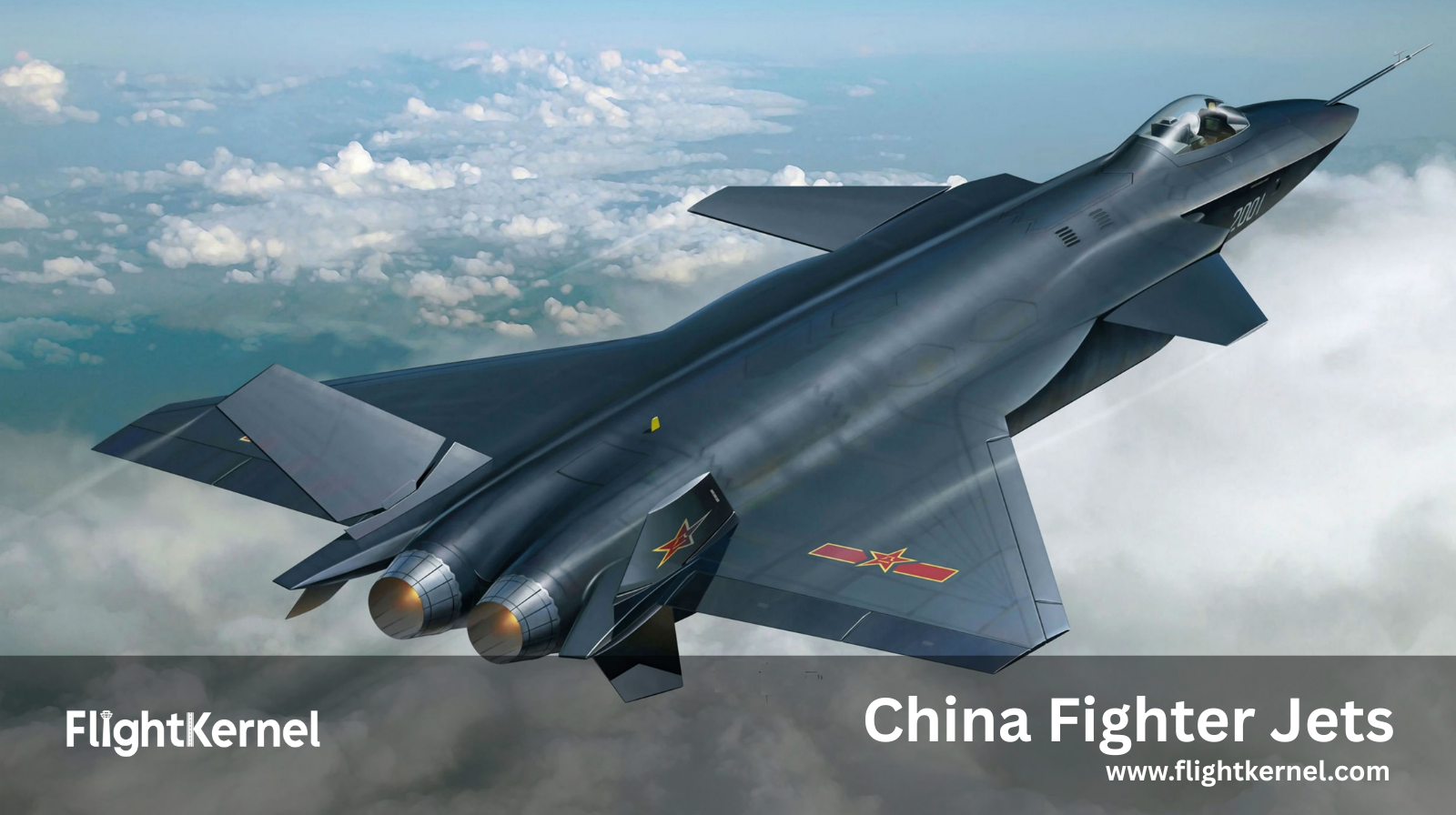
Introducing China Fighter Jets – A Closer Look at China’s Growing Military Aviation Giants
When people hear China fighter jet, one aircraft often comes to mind which is the J-20 Mighty Dragon. But China’s military aviation industry has become far more complicated than a single stealth fighter. From J-10C, the agile multirole aircraft to powerful stealth fighter the J-35, China has built an increasingly diverse fighter fleet. And now, mysterious sixth-generation aircraft have entered the picture.
So, what is China’s top fighter jet? What is the China Air Force fighter jets total? And could Chinese aircraft really challenge America’s famous F-35?
Let’s find out!
A Growing List of China Fighter Jets
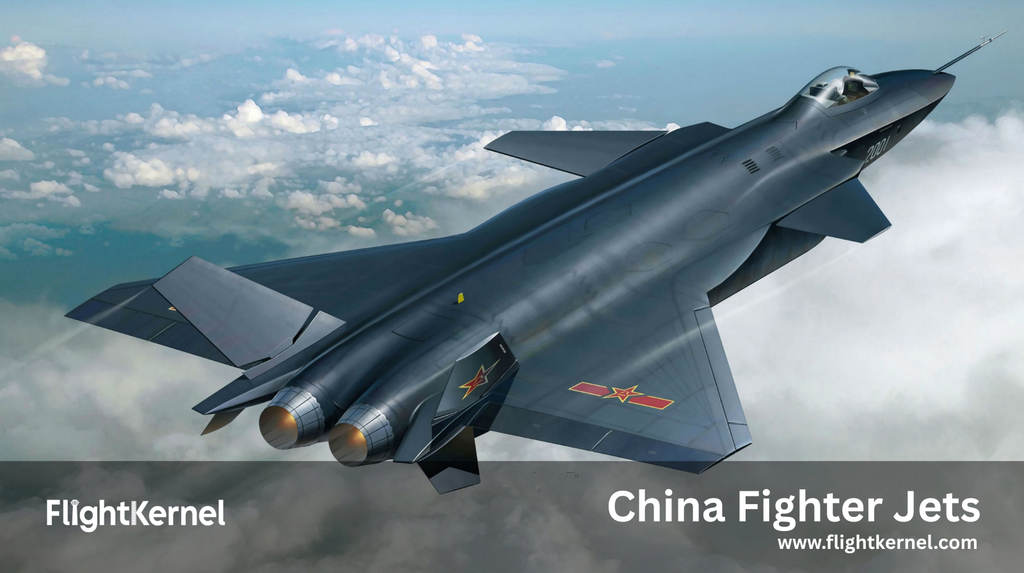
China’s modern fighter fleet includes several generations of aircraft, reflecting decades of rapid military modernization. Among the better-known China fighter jets are the J-7, J-8, J-10, J-11, J-15, J-16, J-20 and the newer J-35 family. Some are older designs that are gradually being replaced, while others represent China’s latest generation of combat aviation.
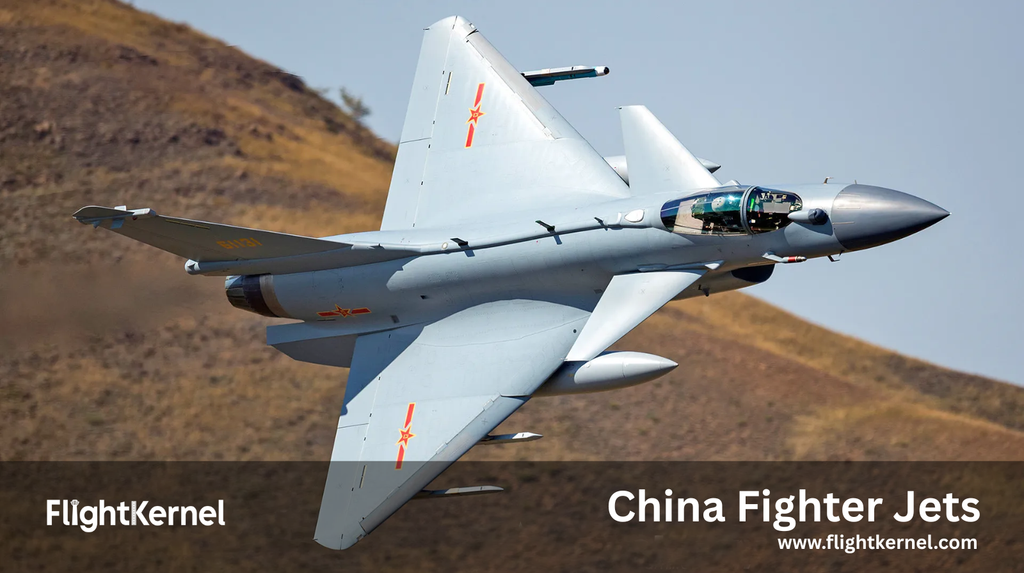
The J-10C, for example, is a 4.5-generation multirole fighter equipped with an AESA radar and modern avionics. The larger J-16 is designed for multirole and strike missions, while the J-20 represents China’s move into fifth-generation stealth aviation.
How many fighter jets does China have?
The scale is impressive. Estimates vary depending on how “fighter” is defined and whether naval aviation is included. One 2026 fleet database estimates around 1,975 aircraft in fighter, interceptor and strike categories within the Chinese air force. Broader assessments put China’s total combat-capable military aviation fleet at several thousand aircraft.
In other words, China’s advantage is not simply having a few sophisticated aircraft. The nation is developing a large and increasingly modernized aviation ecosystem!
What Is China’s Top Fighter Jet?
For now, the strongest answer is the Chengdu J-20 Mighty Dragon.
The J-20 is China’s operational fifth-generation stealth fighter and was designed primarily around air superiority and long-range engagements. Its low-observable design, advanced sensors and ability to carry weapons internally distinguish it from older Chinese fighters.
More importantly, China is producing the J-20 in significant numbers. Recent analysis suggests that the aircraft has moved well beyond the limited prototype stage. It is becoming an increasingly important part of the People’s Liberation Army Air Force (PLAAF).
That makes the J-20 arguably the most important Chinese fighter currently in operational service.
However, there is a new contender for attention which is the J-35!
Is J-35 China’s Answer to the World-famous F-35?
China fighter jet J-35 is a family of stealth fighters developed by Shenyang Aircraft Corporation. The land-based J-35A was publicly displayed at the Zhuhai Airshow in 2024, while another version is intended for carrier operations.
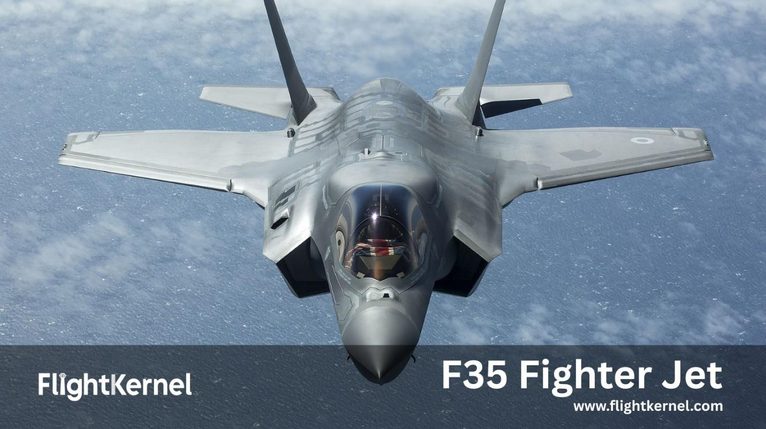
Its appearance immediately attracted comparisons with America’s F-35 Lightning II because both aircraft use a similar stealth-focused design philosophy.
However, looking similar does not mean that they perform identically.
The J-35A is intended to complement China’s existing J-20 force and provide a larger number of relatively affordable stealth aircraft. Its chief designer has described it as a platform that can contribute to China’s defence network and counter high-end threats.
The biggest issue for outside observers is the lack of information. China has not publicly revealed enough reliable technical data to make a definitive J-35-versus-F-35 comparison.
So, calling the J-35 a direct “F-35 killer” would be more headline than science.
Is F-35 Better Than J-20?
The F-35 and J-20 are not simply two versions of the same aircraft. F-35 is a highly networked multirole stealth fighter, while J-20 is associated more strongly with air-superiority and long-range counter-air missions.
F-35 also benefits from extensive operational experience, a huge international user network and an ecosystem of sensors, weapons and data links. J-20, meanwhile, has demonstrated China’s ability to field a sophisticated stealth fighter at scale.
So, there is no reliable public evidence allowing a definitive answer when questioning which one is better. Fighter effectiveness depends on much more than the aircraft itself. That includes weapons, sensors, electronic warfare, pilot training, supporting aircraft and command-and-control networks.
Interestingly enough, the two aircraft have actually come relatively close to each other before.
The Famous China US Fighter Jet Encounter
In 2022, US Pacific Air Forces commander General Kenneth Wilsbach revealed that American F-35s had a close encounter with Chinese J-20s. This has occurred over the East China Sea. He specifically said it was not an “engagement”. However, the American personnel were relatively impressed by the Chinese aircraft’s command-and-control capabilities and professional flying.
This incident is a rare glimpse of how two fifth-generation fighter forces might operate in the same environment. It also highlighted something often forgotten in fighter-jet comparisons which is that modern air combat is not simply “jet versus jet.” A fighter may operate alongside airborne early-warning aircraft, electronic-warfare platforms, missiles and other networked systems. The aircraft is only one piece of the whole puzzle!
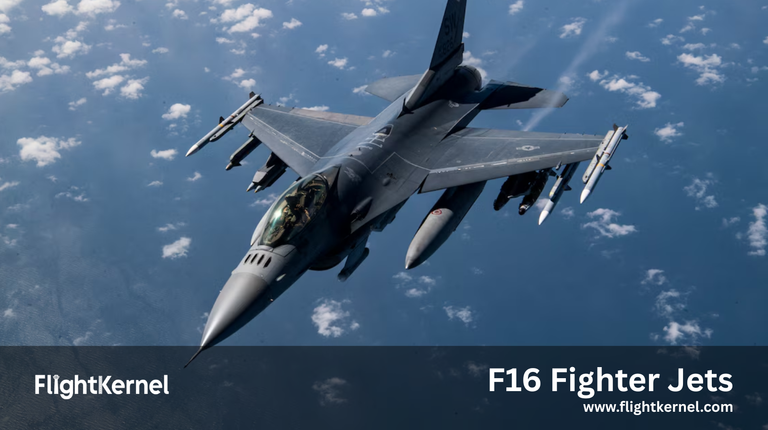
Is J-10C Better Than F-16?
J-10C is a modern 4.5-generation multirole fighter with an AESA radar, modern avionics and access to China’s advanced air-to-air weapons. It is roughly comparable in overall class to newer F-16 variants.
But saying that the J-10C is simply “better” than the F-16 is misleading.
A modern F-16 Block 70/72 has its own advanced AESA radar, avionics, weapons and enormous operational experience. Meanwhile, J-10C has advantages of its own, particularly in its combination of modern sensors, agility and Chinese long-range air-to-air weaponry.
The result would depend heavily on the specific F-16 variant, weapons, support systems, pilot training and combat scenario. But for sure, J-10C can compete with modern F-16 variants!
What Comes Next as the China Fighter Jet 6th Gen?
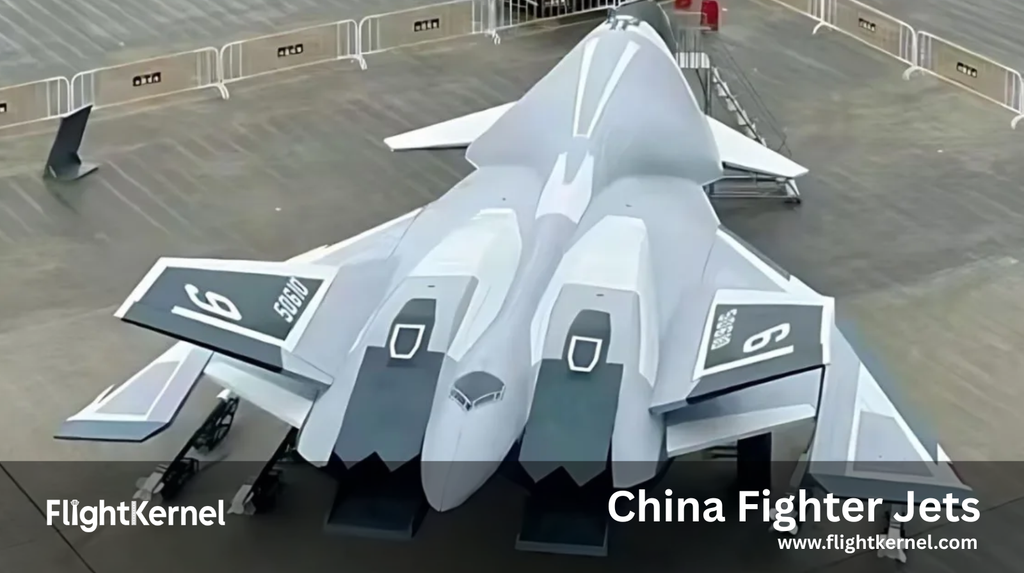
Just when the J-20 and J-35 appear to represent China’s next major leap, mysterious aircraft have pushed the conversation even further. Two unusual designs emerged publicly in late 2024 and became widely associated with China’s possible sixth-generation fighter programme. They are commonly referred to as the J-36 and J-50, although these names are unofficial. Their unusual tailless designs have generated enormous interest among aviation analysts.
The aircraft are believed to explore technologies associated with next-generation combat aviation. They may include advanced stealth, greater range, autonomous or optionally crewed operations, AI and the coordination ability with unmanned aircraft.
However, China has not publicly confirmed all the details surrounding these aircraft, so many claims circulating online remain speculation. Still, their appearance suggests that China is already thinking beyond the J-20 and J-35.
Final Thoughts – The Bigger Picture…
The most fascinating thing about China’s fighter-jet development is not necessarily one particular aircraft. It is the speed of the transformation.
China has moved from operating large numbers of older-generation fighters toward building a force that includes modern aviation technology. They include AESA-equipped multirole aircraft, fifth-generation stealth fighters, carrier-based aviation and possible sixth-generation platforms.
So, what is China’s top fighter jet?
As if for today, J-20 is the clearest answer. The J-35 could become increasingly important as China expands its stealth-fighter fleet. The mysterious sixth-generation aircraft could eventually redefine what China’s air force looks like.
And that is perhaps the most interesting part of this story. The race is no longer simply about building a faster fighter!