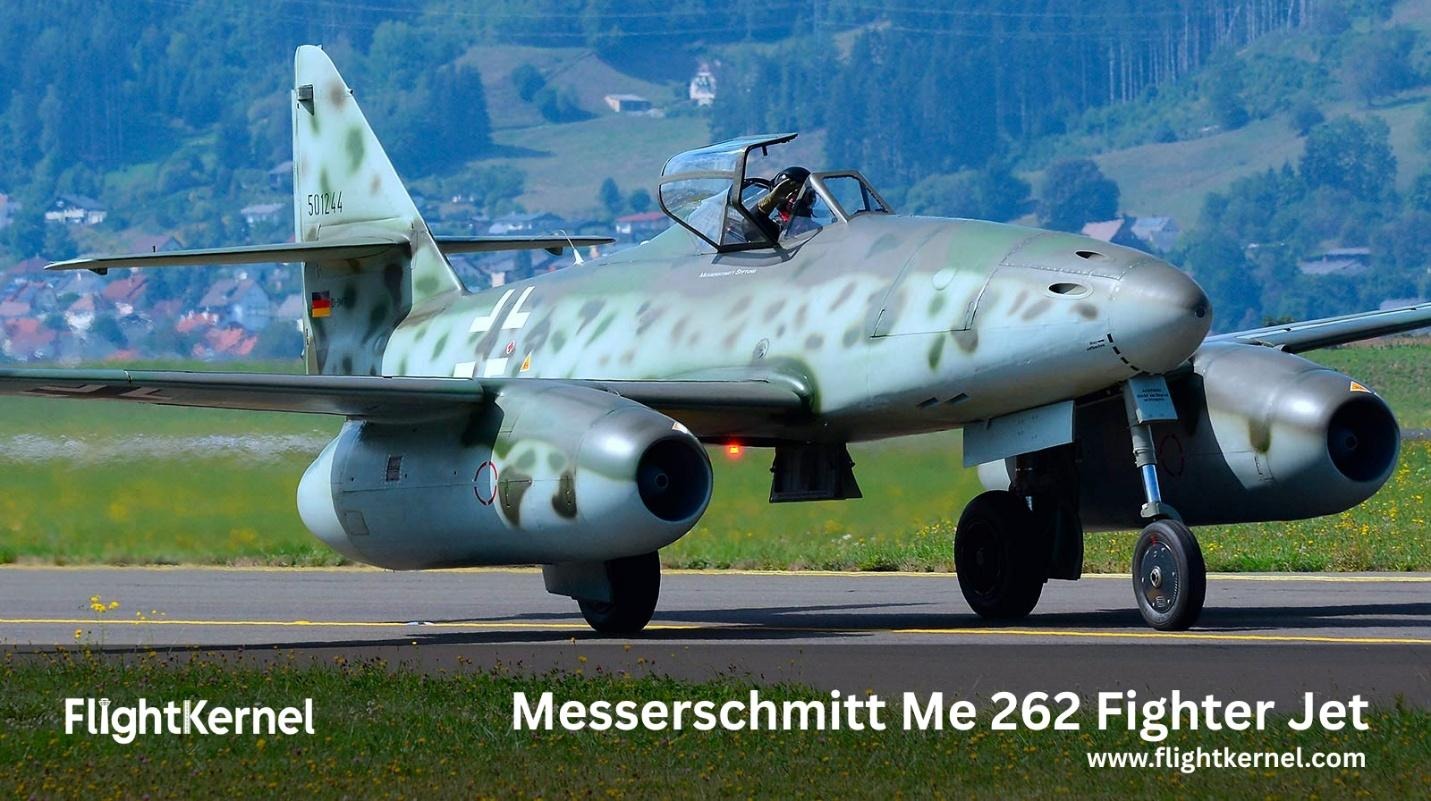
What is Messerschmitt Me 262 Fighter Jet? – Let’s Get to Know the Revolutionary Aircraft That Changed Air Combat Forever!
Imagine being a fighter pilot during World War II, flying at around 650 km/h, when suddenly a strange aircraft zooms past at nearly 870 km/h. Before you even realize what happened, it has already disappeared into the distance. It must have felt like something straight out of the future.That futuristic aircraft was the Messerschmitt Me 262 fighter jet, the world’s first operational jet-powered fighter aircraft.
Nicknamed the Messerschmitt Me 262 Schwalbe (“Swallow”), or Sturmvogel (Storm-Bird”), this revolutionary machine introduced an entirely new era of aerial warfare. If someone from the past was asked, “What was the most feared jet in WWII?” this would be it! Although it arrived too late to change the outcome of World War II, its groundbreaking technology influenced fighter aircraft for decades to come.
What Was the Messerschmitt Me 262 Fighter Jet?
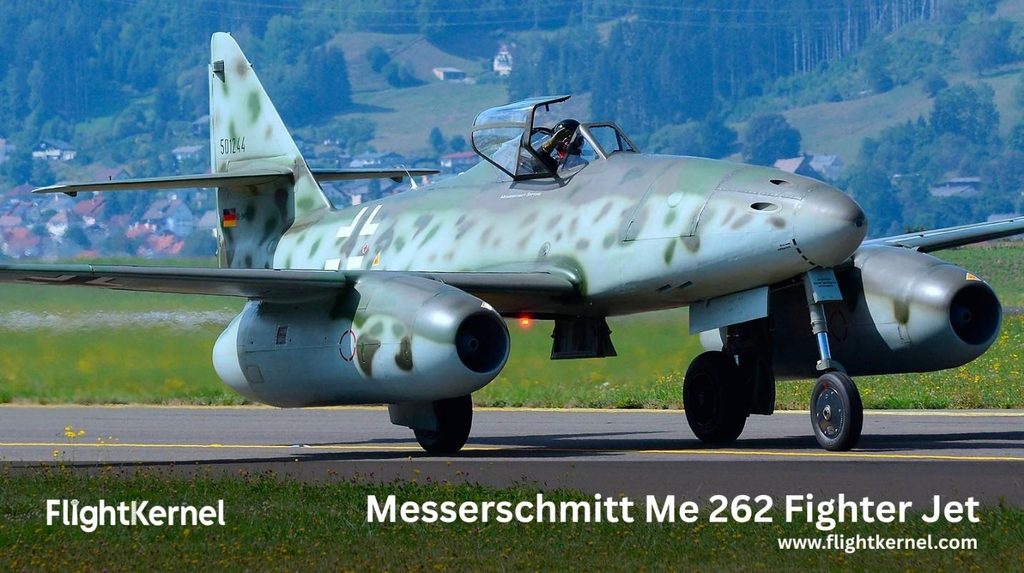
Developed by Germany during World War II, this fighter jet first flew with jet engines in 1942 before entering combat in 1944. Unlike conventional fighter planes powered by piston engines and propellers, the Me 262 relied on turbojet engines. They gave the jets an enormous speed advantage over Allied aircraft.
Its sleek design, swept wings, and powerful jet propulsion made it unlike anything the skies had seen before. Though the aircraft was primarily designed as a fighter interceptor, it was also used as a fighter-bomber and reconnaissance aircraft during the war.
Messerschmitt Me 262 Fighter Jet Specs
These jet specs were incredibly impressive for the 1940s, making them one of the most advanced aircraft of its era. Having a height of 12.6 ft, length of 34.9 ft and wingspan of 41.3 ft, the flight accommodated one crew. With an empty weight around 3800 kg, Messerschmitt Me 262 was capable of having up to 7100 kg during takeoff. Depending on the mission, it was said to be ornamented with four 30 mm MK 108 cannons, rockets, and bombs.
With a range of 1050 km approximately, Me 262 was unstoppable at that time. It could intercept enemy bombers with devastating firepower while maintaining exceptional speed!
Messerschmitt 262 Fighter Jet Top Speed
Speaking of speed, Messerschmitt 262 fighter jet top speed was that one feature that truly amazed pilots and military experts. The aircraft could reach approximately 870 km/h (540 mph), making it the fastest operational fighter aircraft of World War II. At the time, most Allied fighters, including the famous P-51 Mustang and Spitfire, struggled to match this speed. And because of this, Allied pilots often described the Me 262 as nearly impossible to catch once it was airborne.
However, despite this advantage, the aircraft was more vulnerable during takeoff and landing, when its speed was much lower. So unfortunately, Allied pilots soon learned to target Me 262 bases during these critical moments.
Me 262 Engine
The Me 262 was powered by two Junkers Jumo 004 turbojet engines, the world’s first mass-produced turbojet engines used in combat aircraft. These engines generated enough thrust to give the aircraft unmatched speed aka the aircraft’s revolutionary performance.
Unfortunately, they also became one of the aircraft’s greatest weaknesses. Due to wartime shortages of heat-resistant metals, the engines wore out remarkably quickly.
Many lasted only 10 to 25 flight hours before requiring replacement. Pilots also had to accelerate carefully because rapid throttle movements could damage or even destroy the engines.
So, while the Me 262 represented cutting-edge engineering, maintaining it under wartime conditions proved extremely challenging.
The Most Feared Jet During World War II
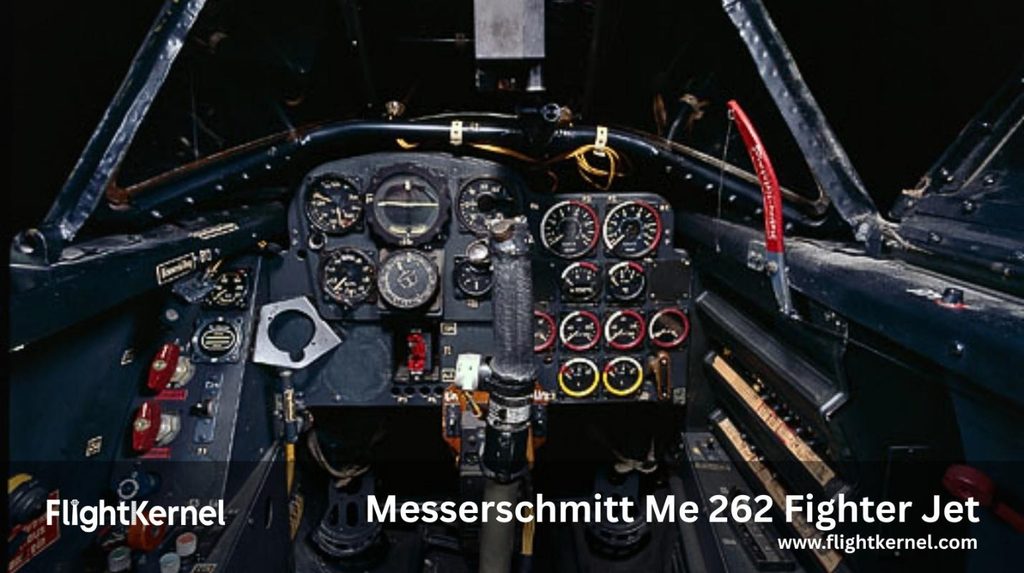
As we told earlier, many aviation historians consider the Me 262 to have been the most feared jet in World War II. Its speed allowed it to attack bomber formations and escape before escort fighters could effectively respond. Armed with four powerful 30 mm cannons, it could destroy heavily armored bombers with only a few hits.
It is not the fact that other experimental jet aircraft did not happen to exist during the war. In fact, none of other experimental aircrafts could achieve the same level of operational success or combat impact as the Me 262. Its appearance forced Allied forces to rethink aerial tactics and accelerated post-war jet fighter development around the world.
How Many Me 262 Were Shot Down?
Sadly, despite their superior speed, these jets were not invincible. Historians estimate that around 100 to 150 Me 262 aircraft were shot down in aerial combat by Allied fighters.
Many were intercepted while taking off or landing, when their jet engines prevented rapid acceleration. Others were lost due to engine failures, pilot training limitations, or fuel shortages.
As Allied pilots became more familiar with the aircraft’s strengths and weaknesses, they developed strategies to counter their speed advantage.
How Many Me 262 Were Destroyed?
Well, the German giants have produced around 1430 aircrafts reportedly, during war time. However, only 300 of them were utilized for the operations due to the limitations with fuel, spare parts, and trained pilots.
By the end of World War II, nearly all surviving Me 262s had been destroyed in combat. The rest were abandoned, captured by Allied forces, or intentionally demolished to prevent them from falling into enemy hands.
Many were also lost on the ground during Allied bombing raids targeting German airfields and factories.
Why Me 262 Did Not Manage to Change the War Outcomes
Considering its remarkable performance, many people wonder why the Me 262 failed to alter the course of World War II. Actually, the answer lies in poor timing and logistics, rather than the performance of this incredible creation.
The aircraft entered service when Germany was already losing the war. Constant Allied bombing disrupted aircraft production, fuel supplies became critically scarce, and experienced pilots were increasingly difficult to replace.
Political decisions also slowed deployment. Adolf Hitler initially insisted that this should serve as a fast bomber rather being a fighter interceptor.
This poor decision making with the jet’s role of usage ultimately delayed its widespread combat use, costing the nation dearly. Too little numbers of the aircraft simply could not overcome Germany’s strategic disadvantages unfortunately.
A Legacy That Lives On
Even though Me 262 saw relatively limited success during World War II, its influence extended far beyond the conflict. This will always be remembered not just as Germany’s first operational jet-fighter but also as the beginner of jet age.
After the war, Allied engineers carefully studied captured Me 262 aircraft. Many design concepts including jet propulsion, swept-wing aerodynamics, and high-speed fighter tactics, inspired the next generation of military aircraft worldwide.
Final Thoughts…
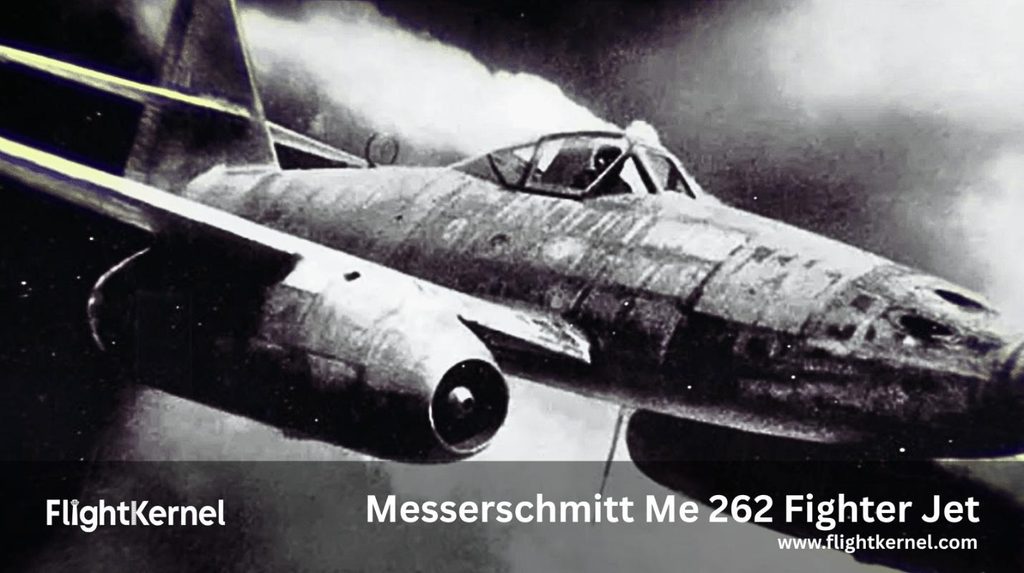
The Messerschmitt Me 262 fighter jet proved that technological innovation could reshape the air combat dramatically. With its incredible speed, weaponry, and revolutionary engines, it left an unforgettable mark on aviation history despite its short career.
Its story also serves as a reminder that groundbreaking technology alone cannot determine the outcome of a war. Timing, logistics, resources, and strategy are equally important to reach a successful outcome.
Even so, the Me 262 will remain one of the most fascinating aircraft ever built by mankind. It will surely continue to go down the history as a machine that truly flew years ahead of its time!